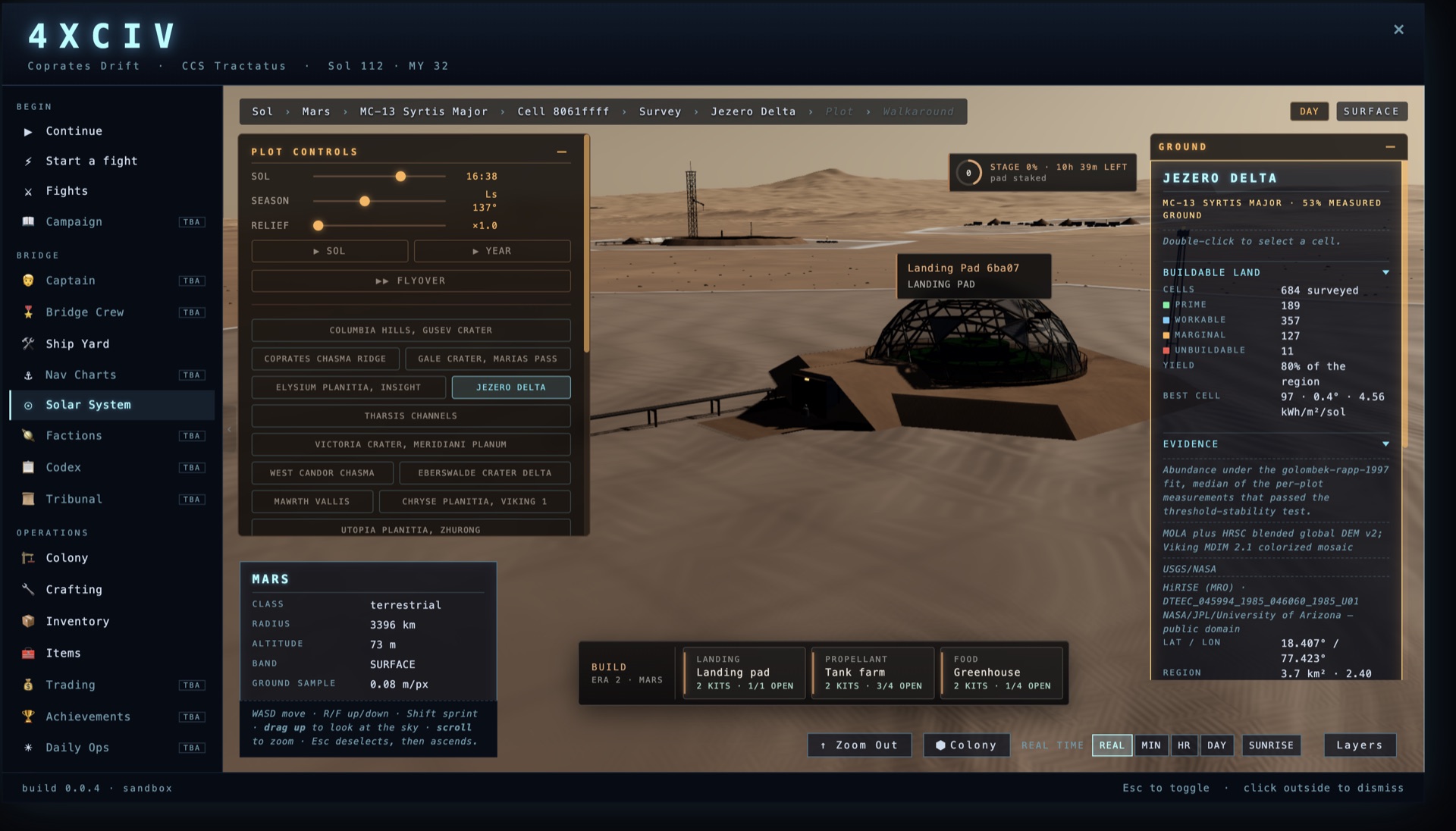
4XCiv Explore · free in your browser

The real solar system, open to anyone.

Every planet, moon and asteroid on its real orbit, rendered from mission data all the way down to the ground, with 91 measured data layers on nine worlds. Fly it, plan with it, check it. No login, no install.

39 tracked bodies 91 data layers No login to explore

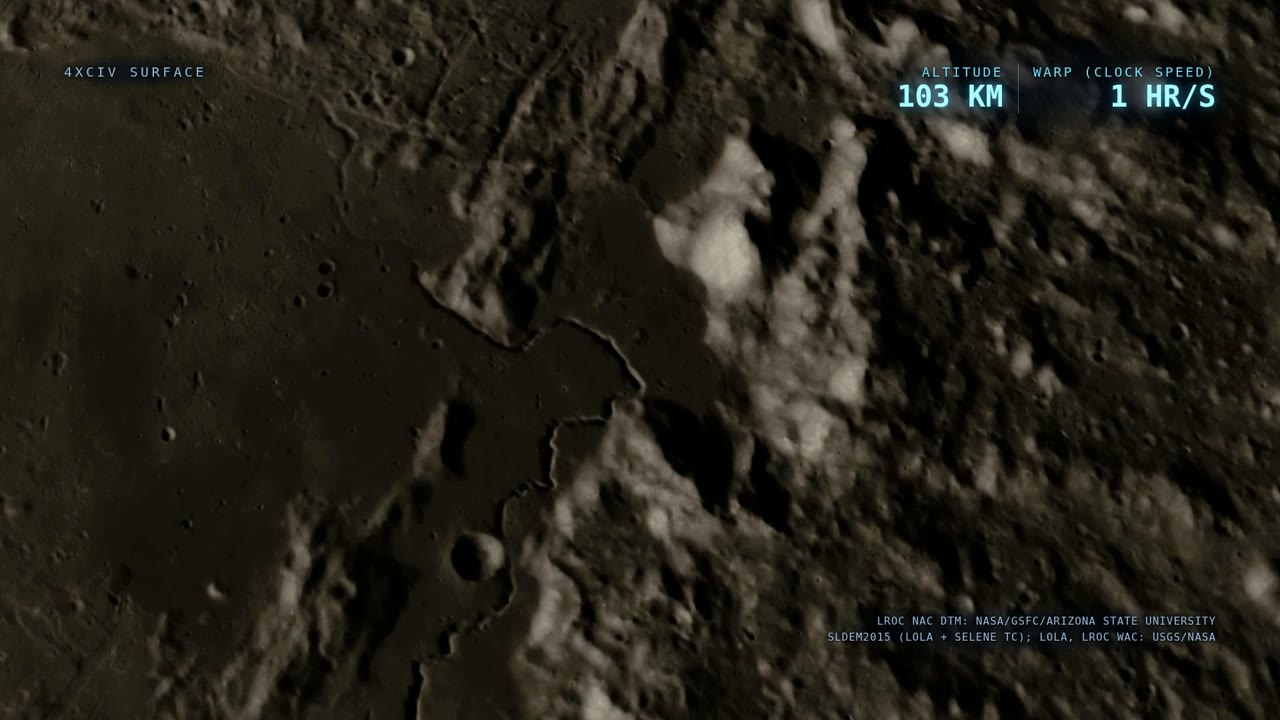
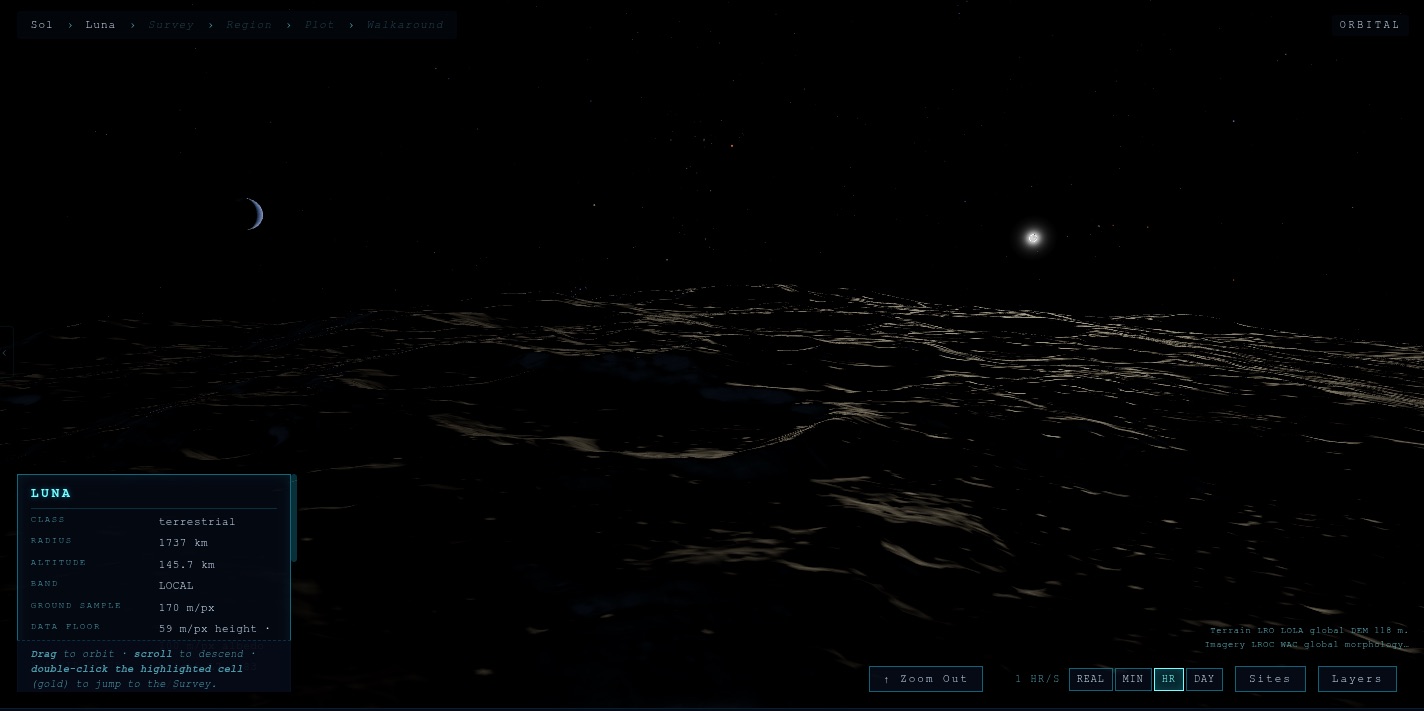
In-engine · Jezero · Hadley · Mauna Kea · Io · Enceladus

4XCiv Explore · free · no login

Put the solar system to work

Not just a pretty globe. Plan trips at real launch windows, stack measured data to scout a site, and trace every number to the mission that took it.

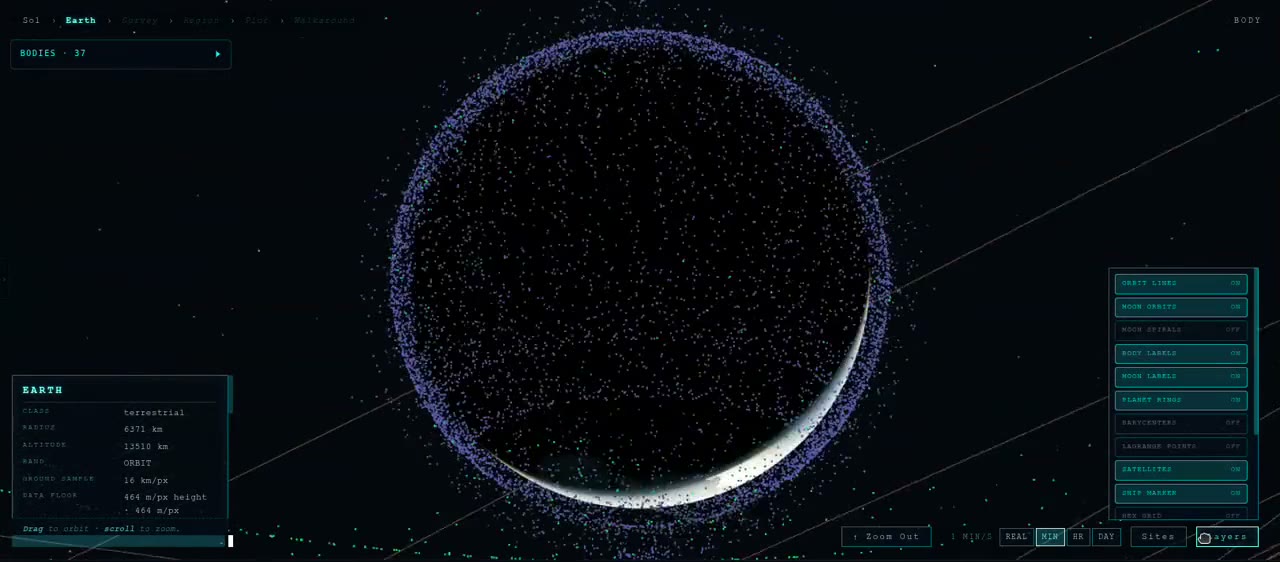
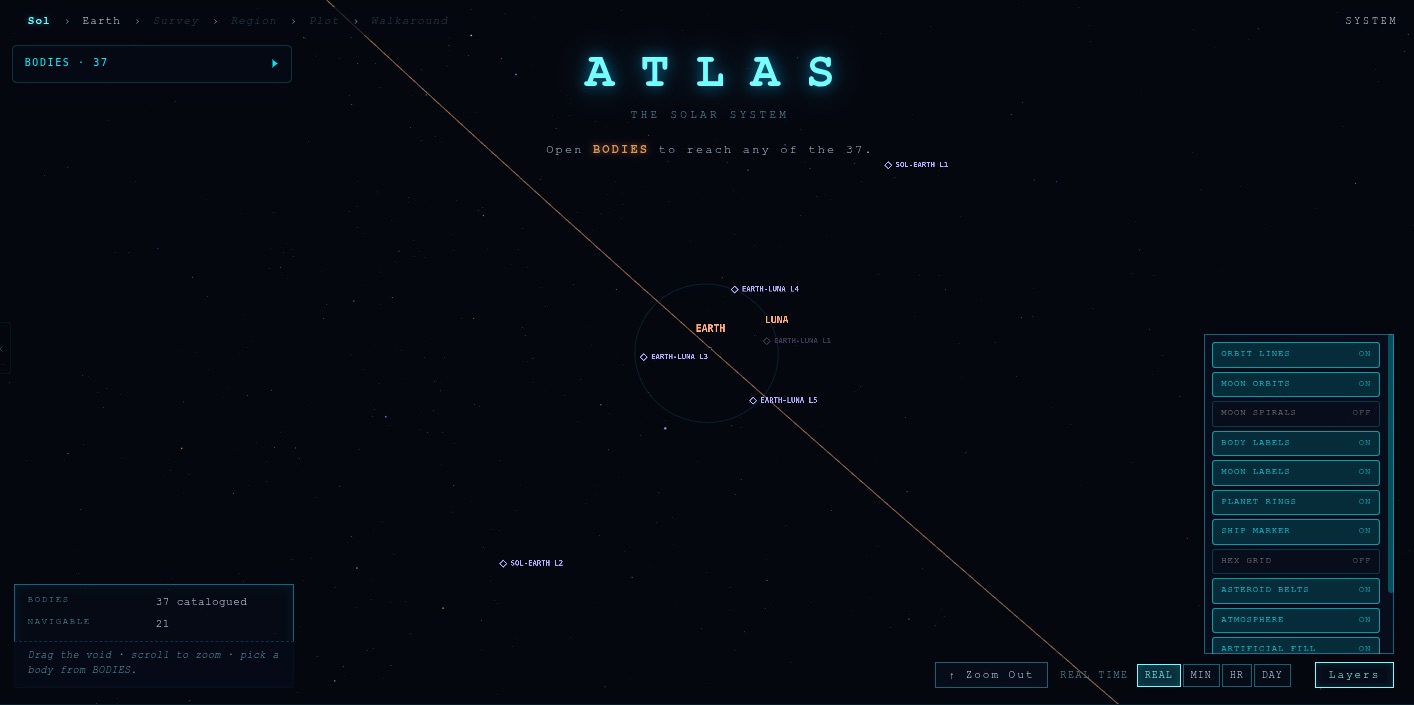
Earth-Moon Lagrange points in the Atlas
Plan a missionLaunch windows
Price the trip. The delta-v map prices destinations from your orbit at the next launch window, the one after, or the best of them, on real orbits. Save the chart, then fly the ship there.
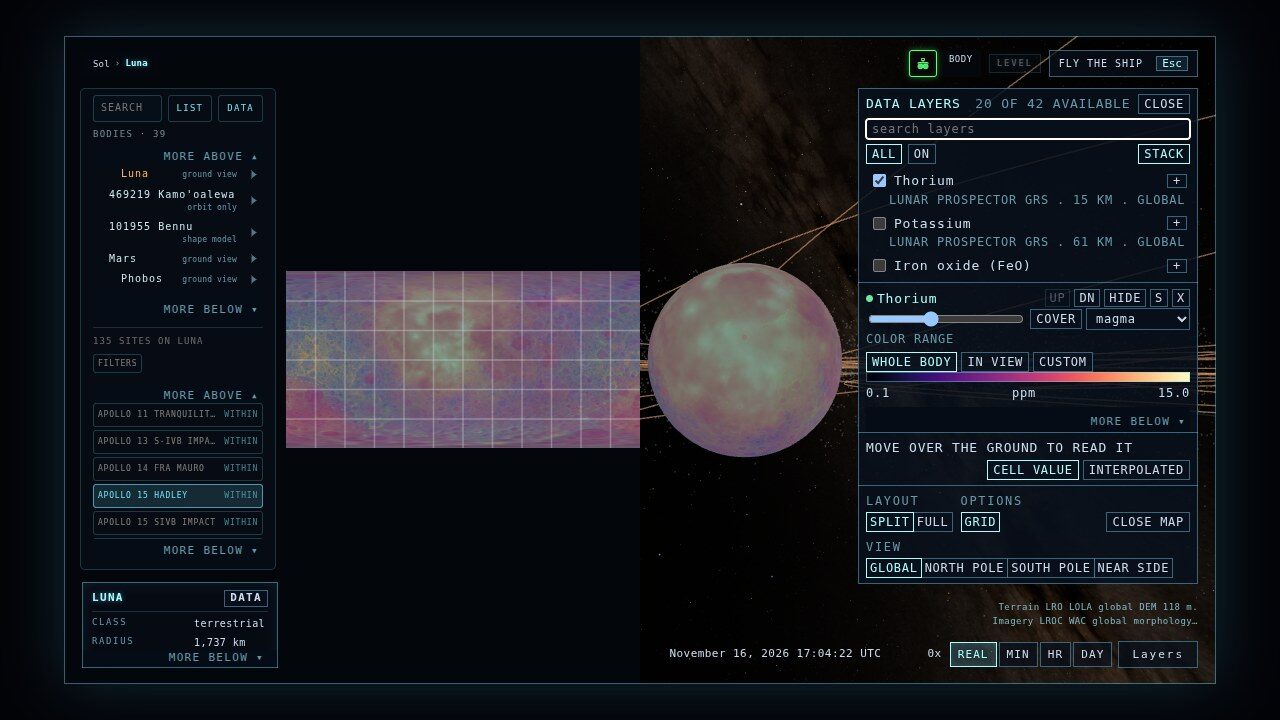
Moon thorium stacked over elevation
Scout a siteStacked layers
Stack the evidence. Lay thorium over elevation, or hydrogen over permanent shadow, to find where resources and good ground line up. Pin a spot and read every layer's value under it.
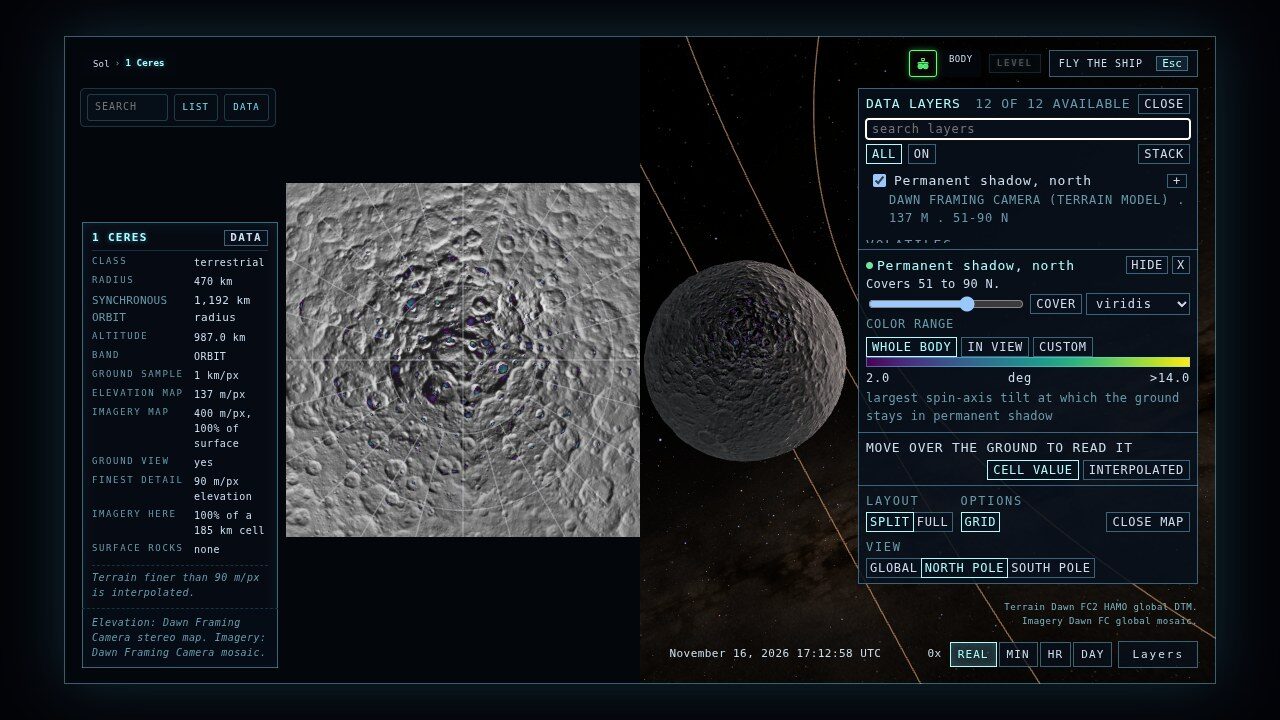
Ceres north polar permanent shadow layer with its data card
Check the numbersCited values
Trace it back. Every layer cites its dataset, and its card gives uncertainty, frame and datum where they apply, so anything you find here leads back to the archive it came from.

Built on real data

Honest physics, all the way down

Where humanity has measured something, the sim uses the measurement. Where it hasn't, the sim says so.

39Tracked bodiesUp from 21 when the Jovian and Saturnian moons shipped.
91Data layersGravity, magnetism, chemistry and ice on nine worlds, each from a mission archive and checked against it.
27Leap secondsEvery one rendered, including 2016-12-31 23:59:60Z.
26–40%Phobos eclipseHow much a Phobos transit dims Mars's sunlight. Modeled at real scale.
5Windows scannedAutopilot picks the best of the next five real transfer windows.
0Logins to exploreexplore.4xciv.com is open to anyone with a browser.

Known gaps stay visible: Pluto's south pole was in seasonal darkness during New Horizons' only flyby, and Voyager 2 never imaged Neptune's north pole. Atmospheric drag is not modeled yet.

Changelog

What's New

Full feed →
LATEST BUILDS play · explore
  • Nov 16featureData layers on nine worlds. Explore now draws 91 measured data layers over the Moon, Mars, Earth, Venus, Mercury, Ceres, Vesta, Pluto and Charon: gravity, crustal magnetism, surface chemistry, ice, temperature and more, each from a mission archive. Every layer opens on the globe and on a flat map beside it, with polar and near-side views, a value readout under the pointer and a card that cites its dataset, and every one is checked against its source at named points.
  • Oct 09fixEarth's surface stays steady at fast warp in Satellites view. Earth's surface no longer flickers or appears to turn the wrong way at fast time rates in the satellites view; it now blurs into zonal bands once the turn outpaces what a frame can show.
  • Oct 09fixGround brightness holds across the cut into a walkaround. The ground's brightness no longer jumps on the frame the camera cuts into a night walkaround at Jezero or Hadley.
  • Oct 08fixColony buildings now sit in their own ground shadow. Landing pads, tank farms and greenhouses drawn as models no longer stay lit inside a ridge's shadow; they now take the same terrain shadow as the ground around them.
  • Oct 08fixGO prices outer-system trips correctly. GO no longer underprices outer-system trips like Jupiter to Neptune; the departure burn is now priced by the same law the autopilot flies.

For AI agents

Built to be queried

AGENT SURFACES Planned

We want Explore and Play to be first-class for AI agents, not just people: ephemeris and body data for research agents, sim actions for agents that play.

get_body("europa")
plan_transfer("earth", "mars", depart="2026-11")

Illustrative only. None of this exists yet. Read the plan →

FROM THE CANON THESIS.md
The first game that could not have existed without strong AI, and the first one designed to teach humanity how to live with it.

Read the thesis excerpts →